E-Commerce SEO Georgia That Turns Regional Search Traffic Into Sustained Revenue
You are generating traffic. Your products are getting impressions.
Your store is attracting visitors from search, social media, paid advertising, and Google Shopping.Yet revenue remains inconsistent.
Many Georgia e-commerce businesses assume the solution is more traffic.
More ads.
More content.
More spending.
The reality is different.Most stores already have enough traffic to generate more sales. The real issue is that their SEO, site architecture, product experience, and conversion paths are not aligned with how Georgia consumers actually buy.
At RezaSEO, I help e-commerce brands capture more high-intent buyers by combining Technical SEO, Entity SEO, Conversion Optimization, Google Shopping Optimization, GEO, AEO, and AI Search Visibility into one scalable growth framework.




Why Most E-Commerce SEO Georgia Campaigns Fail
Many stores already have:
- Product pages
- Category pages
- Blog content
- Paid advertising
- Some search visibility
Yet growth remains unstable.
Common symptoms include:
- High traffic but low sales
- Increasing advertising costs
- Low product page conversions
- Poor Google Shopping visibility
- Cart abandonment
- Weak mobile performance
- Inconsistent organic revenue
You may rank for:
- informational keywords
- broad product searches
- blog topics
But miss searches such as:
- buy skincare products Atlanta
- running shoes Georgia
- protein powder Atlanta
- organic supplements Georgia
- pet supplies Atlanta
- coffee beans Atlanta
- athletic wear Atlanta
- golf accessories Georgia
Those searches often represent buyers who are ready to purchase.
Missing them means losing revenue.
How Georgia Consumers Actually Shop Online
Georgia buyers move quickly. Most purchases happen on mobile devices. Consumer behavior varies by location.

-
Atlanta Buyers
Often expect same-day or next-day delivery. Speed frequently influences the purchase decision. -
Alpharetta Buyers
Typically compare products and inventory availability before purchasing. -
Savannah Buyers
Frequently evaluate shipping timelines before selecting a store. -
Augusta Buyers
Often rely heavily on reviews and trust signals. -
Augusta Buyers
Often rely heavily on reviews and trust signals. -
Macon Buyers
Commonly complete purchases within the same browsing session. -
Athens Buyers
Frequently research products through multiple channels before searching Google to validate their decision.
Buyers want:
- fast delivery
- inventory confidence
- clear pricing
- trust signals
- frictionless checkout
If your store fails to provide these signals quickly, buyers leave.
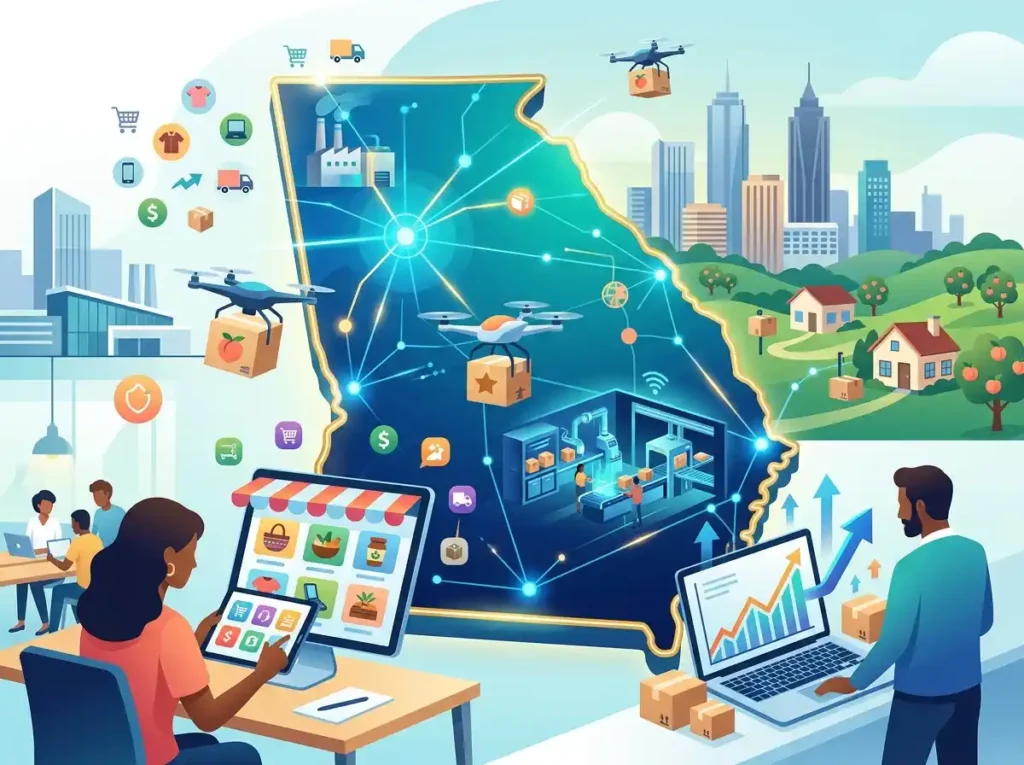
Why Georgia Creates Unique E-Commerce Opportunities
Georgia has become one of the strongest e-commerce logistics hubs in the Southeast. Businesses benefit from:
- Atlanta fulfillment infrastructure
- Major distribution networks
- Regional shipping advantages
- Access to Southeast markets
- Fast delivery capabilities
Stores that align SEO with fulfillment capabilities often outperform competitors. When buyers see:
- local inventory
- fast delivery
- regional availability
conversion rates typically improve.
The Difference Between Browsing Traffic and Buying Traffic
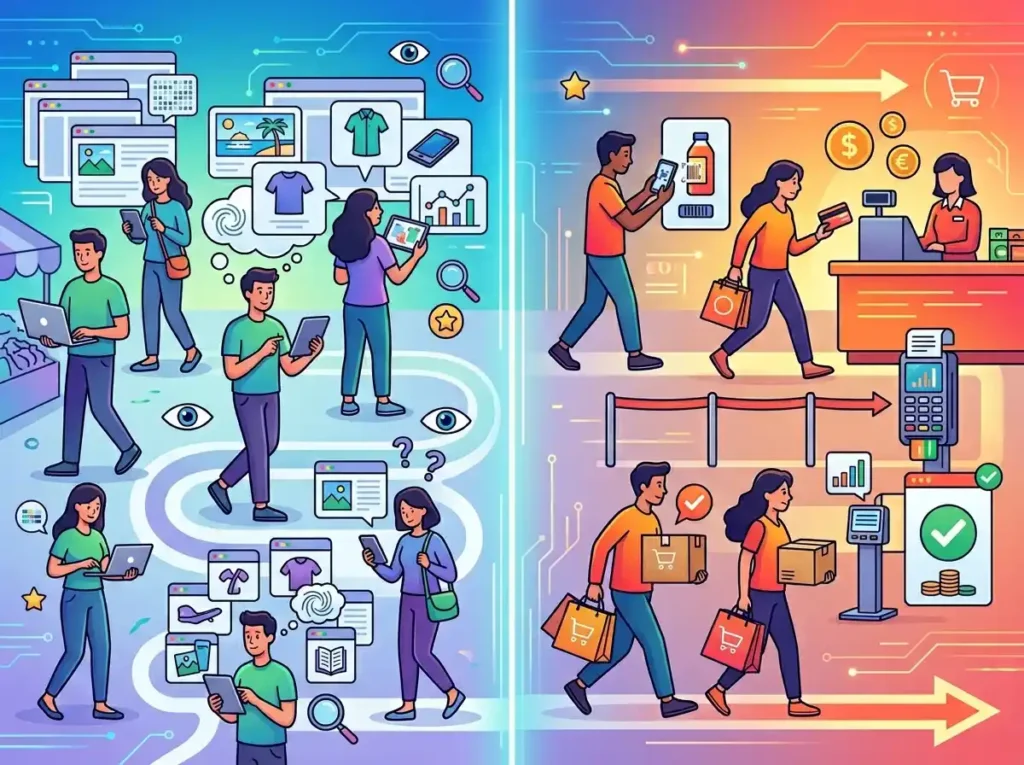
Informational Search
“Best skincare routine”
“Best athletic wear brands”
“Best home décor trends”
These users are researching.
Transactional Search
“Buy Korean skincare Atlanta”
“Running shoes Georgia”
“Protein powder near me”
“Pet supplies Atlanta”
These users are ready to buy.Revenue comes from transactional intent.
Not pageviews.
How Google Shopping Influences E-Commerce Revenue
Many buyers never visit traditional search results.
Instead, they interact with:
- Google Shopping
- Product Rich Results
- Merchant Center Listings
- Product Knowledge Panels
For many e-commerce businesses, Google Shopping generates some of the highest-converting traffic.
Strong Google Shopping visibility depends on:
- Accurate product data
- Structured product attributes
- Pricing consistency
- Inventory accuracy
- Merchant trust signals
Without optimization, stores lose highly qualified buyers.
What I've Learned From Auditing 50+ E-Commerce Stores
Across Shopify, WooCommerce, and BigCommerce stores, the same pattern appears repeatedly.
Most businesses already have:
- Products
- Traffic
- Advertising
- Content
But:
- Technical issues limit visibility
- Category structures confuse search engines
- Products are poorly optimized
- Conversion paths contain friction
The issue is rarely effort. The issue is alignment.
Growth happens when SEO, user experience, product architecture, and buyer intent work together.
Case Study: Scaling Organic Revenue for a Georgia Apparel Brand
Before Optimization
- 22,000 monthly visitors
- 1.3% conversion rate
- heavy paid advertising dependence
Challenges
- weak local intent targeting
- poor category architecture
- inefficient internal linking
- low transactional visibility
Strategic Improvements
- optimized product pages
- rebuilt collection structures
- strengthened internal linking
- implemented structured data
- improved Google Shopping feeds
- aligned content with purchase intent
Results After 60 Days
- conversion rate increased to 2.7%
- organic revenue increased by 35%+
- lower dependence on paid acquisition
- stronger Google Shopping visibility
Traffic remained relatively stable. Revenue increased significantly.


Why Product Pages Matter More Than Blog Posts
Many stores invest heavily in blogging. Yet most revenue comes from:
- Product pages
- Collection pages
- Category pages
- Shopping feeds
Not blog articles. Product pages should answer:
- Is this available?
- How quickly can it ship?
- Why should I buy from this store?
- Can I trust this brand?
When product pages fail to answer these questions, conversions suffer.
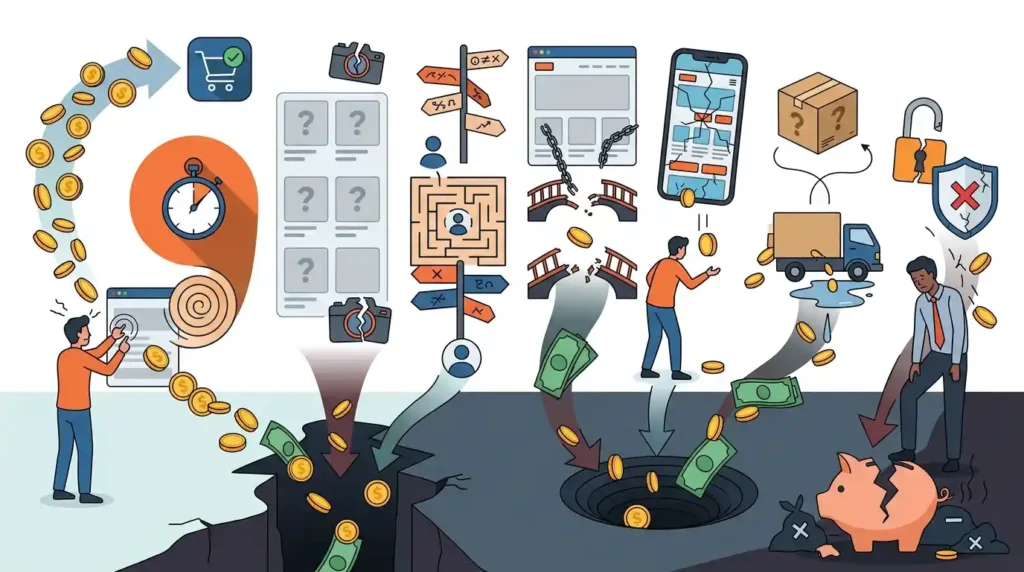
Where E-Commerce Revenue Is Lost
Revenue is commonly lost because of:
- slow page speed
- weak product descriptions
- poor product imagery
- confusing navigation
- weak internal linking
- poor mobile usability
- unclear shipping information
- weak trust signals
Small friction points create significant revenue loss.
How Entity SEO Improves E-Commerce Visibility
Search engines increasingly evaluate entities rather than keywords.
Important entities include:
- Business Entity
- Brand Entity
- Product Entity
- Category Entity
- Georgia Market Entity
Strong entity relationships help search engines understand:
- What you sell
- Who your products serve
- Where you operate
- Why your store deserves visibility
Entity SEO improves performance across:
- Google Search
- Google Shopping
- Google AI Overviews
- ChatGPT
- Gemini
- Perplexity
How AI Search Is Changing Product Discovery
Consumers increasingly discover products through AI-powered search experiences.
Examples include:
- Best skincare products in Georgia
- Running shoes for marathon training
- Best protein powder for weight loss
- Coffee brands in Atlanta
- Pet supplies near me
AI systems evaluate:
- structured data
- product information
- entity relationships
- trust signals
- content quality
Stores optimized for AI retrieval gain additional visibility beyond traditional search.
The RezaSEO E-Commerce Growth Framework
Phase 1: Intent Mapping
Identify high-converting transactional opportunities.
Phase 2: Product Optimization
Improve product-level visibility and conversions.
Phase 3: Category Architecture
Create scalable collection and category structures.
Phase 4: Technical SEO
Resolve crawlability, indexing, speed, and mobile issues.
Phase 5: Google Shopping Optimization
Improve product feed quality and shopping visibility.
Phase 6: Entity SEO
Strengthen relationships between products, categories, and brands.
Phase 7: AI Search Optimization
Improve visibility in AI-generated recommendations.
Phase 8: Conversion Optimization
Remove friction throughout the buying journey.
What's Included in E-Commerce SEO Georgia
Every engagement includes:
- Technical SEO Audit
- Product SEO Analysis
- Collection Page Optimization
- Internal Linking Improvements
- Schema Implementation
- Google Shopping Optimization
- Entity SEO Analysis
- GEO Optimization
- AEO Optimization
- AI Search Optimization
- Search Console Analysis
- Conversion Opportunity Review
- Competitor Analysis
Why Work With RezaSEO.com?
I help e-commerce businesses grow through a combination of:
- Shopify SEO
- WooCommerce SEO
- BigCommerce SEO
- Technical SEO
- Entity SEO
- Local SEO
- AI Search Optimization
- Conversion Optimization
My approach focuses on one objective. Generating more revenue from buyers who are already searching for your products.
⭐⭐⭐⭐⭐ Client feedback: “Our E-Commerce SEO Service in Georgia finally started ranking in Maps—calls increased without increasing ad spend.”
Frequently Asked Questions
What Is E-Commerce SEO?
E-Commerce SEO improves your store’s visibility so buyers can discover and purchase your products through organic search.
How Long Does E-Commerce SEO Take?
Most stores begin seeing measurable improvements within three to six months depending on competition and site condition.
Does SEO Reduce Ad Dependency?
Yes. Strong organic visibility helps reduce reliance on paid acquisition channels.
Does SEO Help Google Shopping?
Yes. Product optimization, structured data, and feed improvements strengthen Google Shopping visibility.
Can SEO Improve Conversion Rates?
Yes. Better product pages, improved user experience, and stronger buyer intent alignment often increase conversions.
Can Products Appear in AI Search Results?
Yes. Entity SEO, structured data, and AI optimization improve visibility in AI-generated recommendations.
Get E-Commerce SEO Georgia That Drives Real Revenue
If your store is generating traffic but revenue remains inconsistent, the issue may not be visibility. It may be how effectively your store converts high-intent buyers. I will identify:
- missed revenue opportunities
- product visibility gaps
- conversion bottlenecks
- Google Shopping weaknesses
- AI search opportunities
Get E-Commerce SEO Georgia built for real buyers, real conversions, and sustainable revenue growth.