How Atlanta Consumers Actually Shop Online
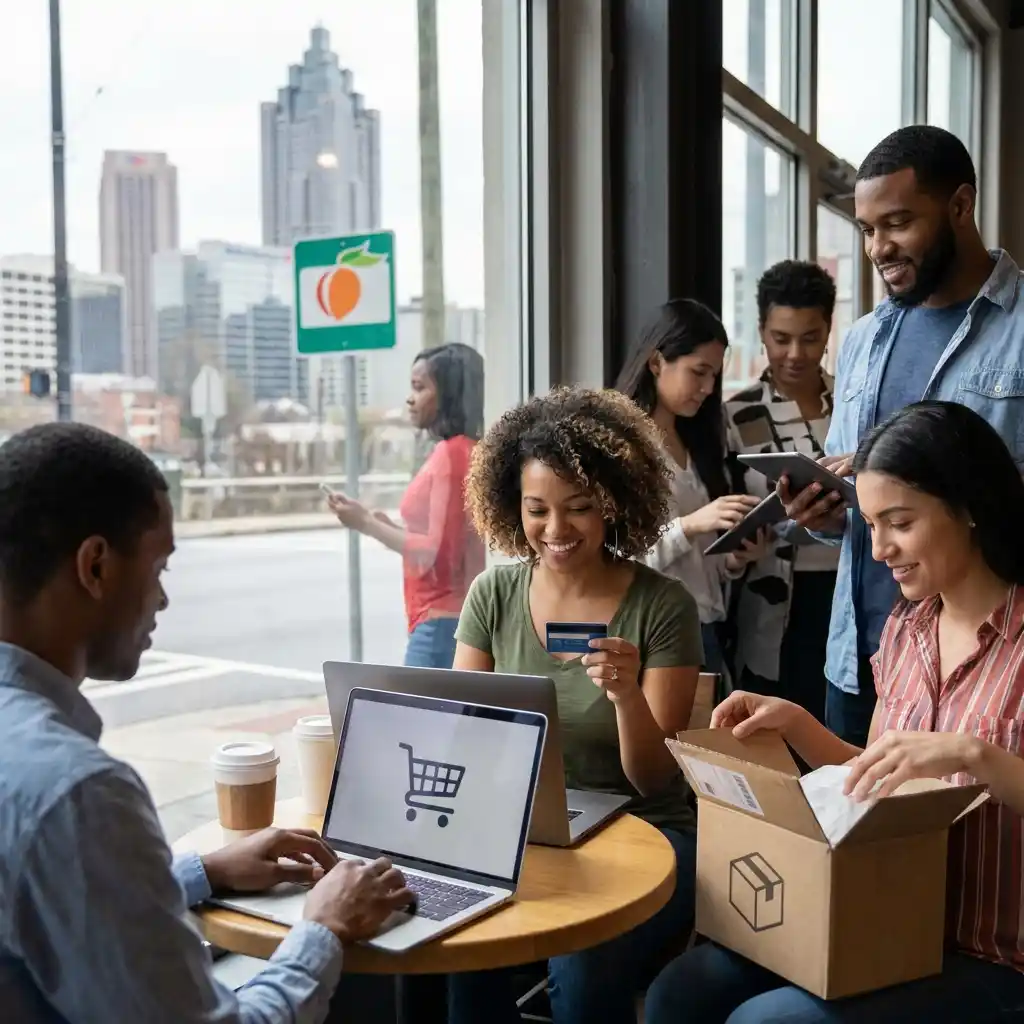
Consumer purchase behavior across the Atlanta metro area follows clear and measurable patterns. When buyers are ready to purchase, they rarely begin with broad informational searches. Instead, they use highly specific, location-based queries that help them find products quickly and conveniently.



Common searches include:
- bakery delivery Atlanta
- custom cakes Atlanta
- pizza delivery Atlanta
- flower delivery Atlanta
- organic skincare Atlanta
- Korean skincare Atlanta
- pet supplies Atlanta
- gourmet coffee Atlanta
- supplements Atlanta
- gift baskets Atlanta
- candles Atlanta
- local grocery delivery Atlanta
Buyers also use neighborhood-specific searches such as:
- bakery Buckhead
- pizza Buckhead
- skincare products Alpharetta
- coffee shop Alpharetta
- birthday cakes Sandy Springs
- flower delivery Roswell
- flower delivery Roswell
- pet store Marietta
- gift shop Decatur
These searches indicate strong purchase intent because the customer has already decided what they want. Their remaining question is where they can buy it locally and how quickly they can receive it.
This behavior is especially common among consumers looking for convenience, faster delivery, local pickup, and trusted local businesses.
To capture these buyers, your Shopify store must demonstrate local relevance throughout the customer journey.
Atlanta shoppers typically look for three critical trust signals before making a purchase.
Immediate Product Availability
Can they order today without waiting weeks for fulfillment?
Clear Delivery Expectations
Do you offer same-day delivery, next-day delivery, or local pickup options?
Local Trust Indicators
Do your reviews, customer testimonials, business information, and location signals demonstrate that you actively serve customers throughout Atlanta, Buckhead, Midtown, Sandy Springs, Alpharetta, Roswell, Marietta, and Decatur?
When these signals are missing, buyers often leave and purchase from a competitor that appears more local, more trustworthy, and more convenient.
Insights From Auditing and Optimizing Shopify Stores
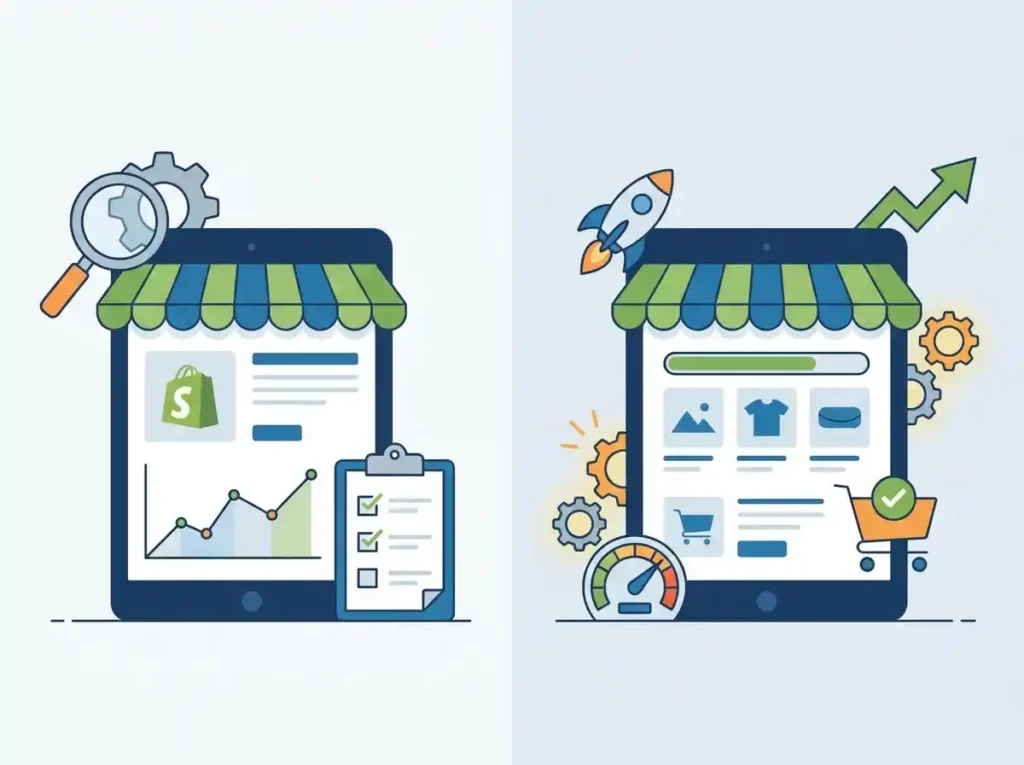
After auditing and optimizing dozens of Shopify stores, one pattern consistently appears.Most stores do not have a traffic problem.
They have an intent alignment problem.
Many businesses invest heavily in content marketing, paid advertising, and broad keyword targeting. Traffic grows, but revenue remains stagnant because visitors are not arriving with purchasing intent.
Sustainable growth typically comes from aligning three core components:
- High-Intent Local Keywords
- Geo-Optimized Product and Collection Pages
- Strong Local Entity and Trust Signals
- Consistent Organic Revenue Growth
When these elements work together, stores become significantly more visible to local buyers who are ready to purchase, resulting in stronger conversion rates and reduced dependence on paid advertising.
Case Study: From Paid Traffic Dependency to Consistent Local Revenue
We implemented this framework for a Georgia-based Shopify retailer focused on expanding its reach throughout the Atlanta metro area.
Starting Point
The store attracted approximately 18,000 monthly visitors but maintained a conversion rate of only 1.2%.
Despite healthy traffic numbers, growth relied heavily on increasing advertising spend.
Strategic Improvements
Rather than pursuing more informational traffic, we focused on improving purchase-intent alignment.
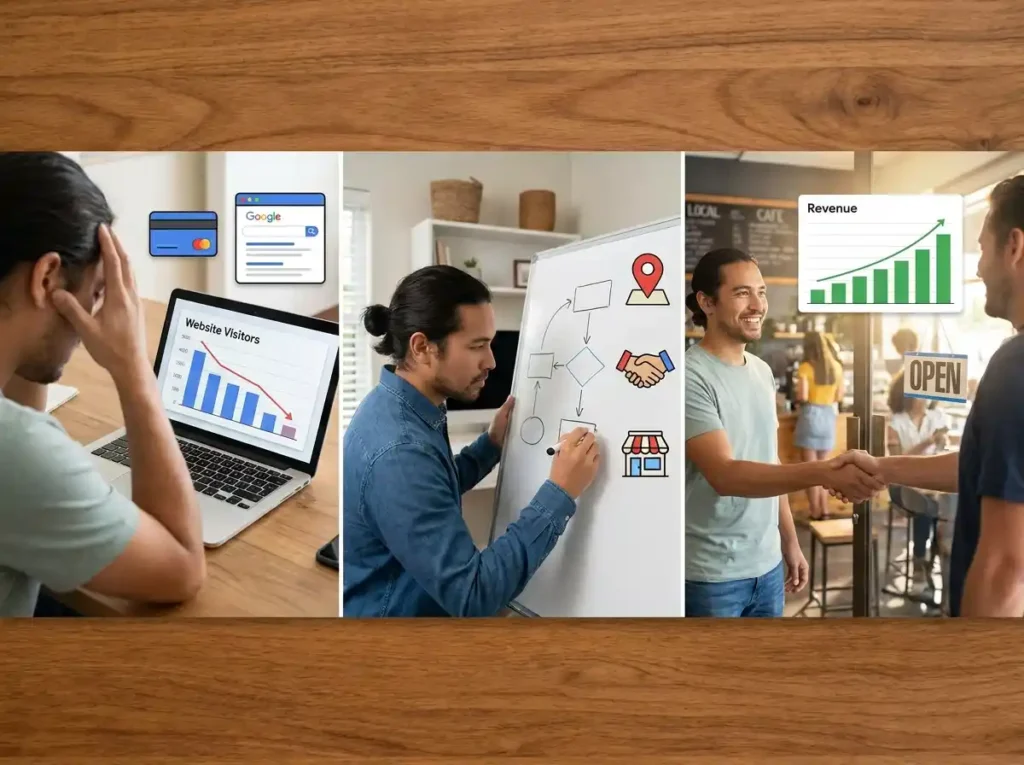

Key improvements included:
- Shopify collection page optimization
- Product page restructuring
- Local schema implementation
- Google Business Profile integration
- Internal linking improvements
- Atlanta-focused transactional keyword targeting
- Stronger local entity signals
Outcome After 60 Days
Traffic remained relatively stable. However:
- Conversion rate increased to more than 2.3%
- Monthly revenue increased by over 30%
- Customer acquisition costs decreased
- Dependence on paid advertising was reduced
Results vary based on competition, product demand, website quality, and market conditions.
Why Shopify Requires a Different Local SEO Strategy
Shopify is not WordPress. It is not WooCommerce. It is not a traditional local business website. Successful Shopify SEO requires platform-specific optimization.
Critical components include:
- Shopify Collections
- Product Schema
- Search and Discovery architecture
- Product variants
- Navigation structures
- Metaobjects
- Internal filtering systems
- Collection hierarchy
When these elements are optimized correctly, search engines gain a stronger understanding of your products, categories, and local market relevance.
This creates stronger rankings, better user experiences, and more qualified traffic.
Shopify Local SEO Atlanta for AI Search Visibility
Search behavior is changing rapidly. Buyers increasingly discover products through AI-powered platforms such as ChatGPT, Google AI Overviews, Gemini, and Perplexity. These systems rely heavily on structured information, trusted entities, and clear business signals.
To improve visibility across both traditional and AI-powered search platforms, your Shopify store needs:
- Structured product data
- Local business entity signals
- Consistent location information
- Schema markup
- Strong category architecture
- Trusted citations and references
- Clear relationships between products and collections
The easier your store is to understand, the easier it becomes for search engines and AI systems to recommend your products to potential customers.
This helps your business compete for visibility beyond traditional search rankings.
Why Work With RezaSEO.com?
I help Shopify brands and local businesses generate more qualified traffic, stronger visibility, and higher revenue through Shopify SEO, Local SEO, Google Maps optimization, Entity SEO, and AI Search Optimization.
With more than four years of experience helping businesses improve their online visibility, my focus is simple: Attract buyers who are ready to purchase. Every strategy is built around:
- Local search visibility
- Transactional keyword targeting
- Conversion-focused optimization
- Entity SEO
- Google Maps visibility
- AI search readiness
The objective is not more traffic.The objective is more revenue from qualified buyers.
⭐⭐⭐⭐⭐ Client feedback: “Our Sandy Springs black car service finally started ranking in Maps—calls increased without increasing ad spend.”
Frequently Asked Questions
What is Shopify Local SEO?
Shopify Local SEO helps your store appear for location-based searches such as “buy near me” and “product Atlanta,” helping attract buyers with strong purchase intent.
Can Shopify stores rank in local search results?
Yes. Shopify stores can rank for local searches when collection pages, product pages, business information, schema markup, and local trust signals are properly optimized.
Do Shopify stores need a Google Business Profile?
If you serve a specific geographic area, offer local delivery, or provide pickup options, a Google Business Profile can significantly improve local visibility and trust.
How long does Shopify Local SEO take?
Most businesses begin seeing measurable improvements within three to six months, depending on competition, website condition, and market demand.
Is Shopify Local SEO different from traditional eCommerce SEO?
Yes. Local Shopify SEO focuses on geographic relevance, local entities, buyer intent, Google Maps visibility, and location-specific search opportunities.
Can Shopify Local SEO reduce advertising costs?
Many businesses reduce their dependence on paid advertising after improving visibility for high-intent local searches and increasing conversion rates from organic traffic.